August 11th – 14th
North West Summer School at Manchester Metropolitan University (MMU).
Booking details and application form
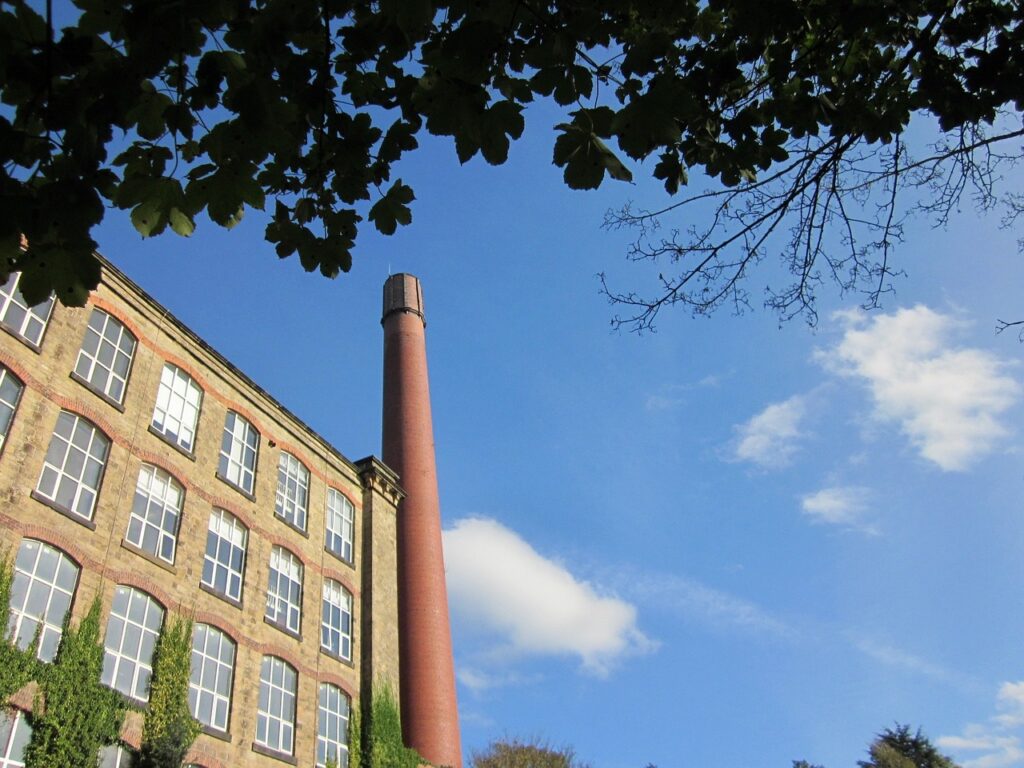
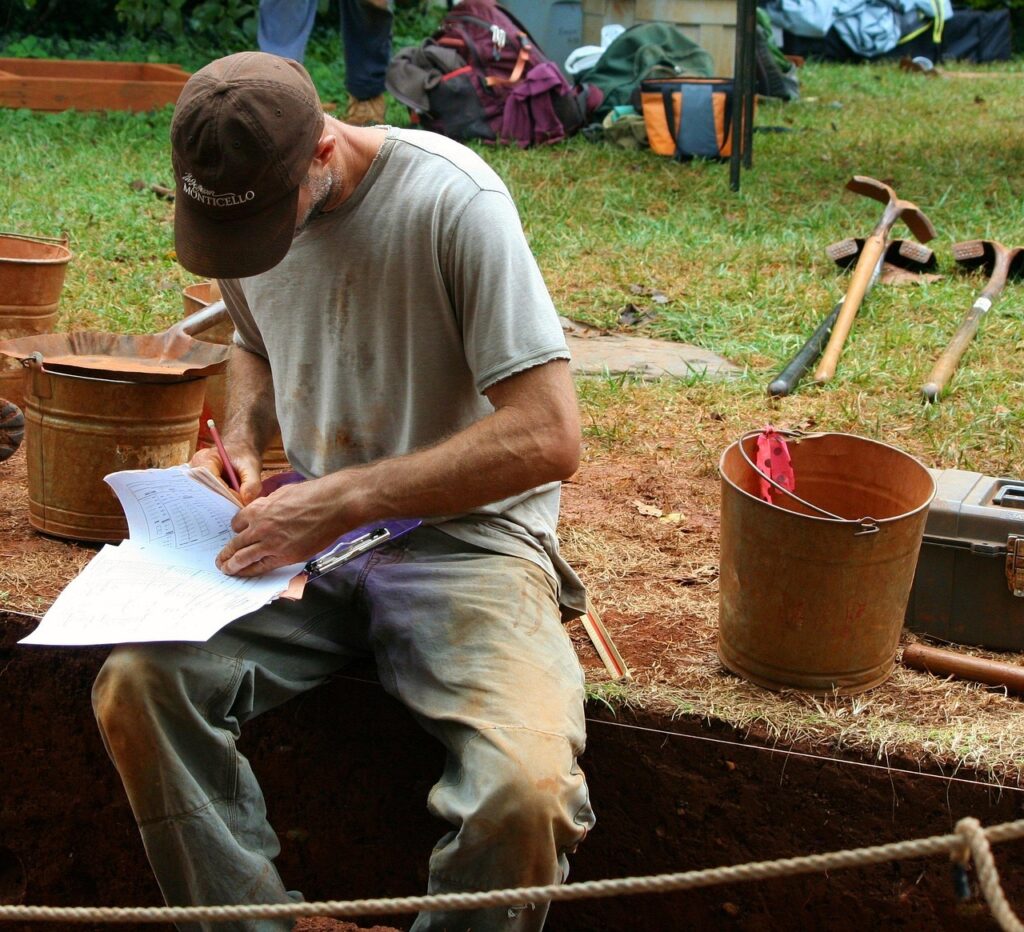
Archaeology Explorers
Course now fully booked.
Group Leader: Maggy Simms
Manchester astonished the world with its rapid growth during the 19th and early 20th centuries. But part of the price was that the accumulated remains of past centuries were swept aside and lost.
With improved methods and approaches in archaeology, and better dialogue with developers, the city's story is being slowly pieced back together. You still have to know where to look, and what to look for. Our enjoyable task will be to explore some of the jigsaw pieces that hint at the picture of both the distant and the more recent, but forgotten, past.
More details
This course has been based around use of public transport and some level, paved walking. The longest planned walk is around 800m and involves some steps, however if you need it, alternative on-the-level public transport is available. Please make sure you make the course leader aware of your particular needs at the time of booking.
You might want to bring pen and paper to make notes
You are welcome to bring into all room-based sessions your phone, other hand-held device or laptop, and to use them during sessions as appropriate. This is not an essential requirement but is intended to allow course members to maximise their learning. Do not carry any electronic equipment larger than a phone when we are out and about.
Handouts will be provided both in print and as online links for future reference
Please bring a national bus pass if you have one, and (if you have them) any passes that relate to Greater Manchester Transport. Information about obtaining tickets and day travel passes will be provided closer to the course date.
The alternative use of a coach at a supplement will be investigated.
Course outline
Day 1: pm : Introduction : Our itinerary and where it sits on the ancient timeline, from Lindow Man to Little Ireland. Orientation to our routes and what we can expect to see.
Discussion and questions from the group.
Introduction to the transport we will use.
Day 2
Morning: the area around Manchester Cathedral, an Anglo Saxon stronghold. Exploration of evidence on the ground from early medieval (9th century AD ) to early modern (late 1500s AD)
Afternoon: the Roman fort and vicus - option of Science and Industry Museum (free entry)
Then partial walk (800m along canal towpath) to Oxford Road then bus or walk to Manchester Museum to see archaeology displays
A brief curator talk is intended for early on day 3
Day 3
Morning: Did we get to Manchester Museum on day 2?
Walk 400m to Manchester Museum for brief curator talk
Late morning / afternoon: Visit to Ordsall Hall, Salford, an unexpected gem in the middle of former industrial dockland
Displays include ancient log boat found during Ship Canal work
Reverse journey to get back to base for R+R and dinner. Possibly some free time depending on how morning goes
Day 4 am
Summary, questions and debriefing
Quiz and glittering prizes!
Making Sense of Everyday Mathematics
Group Leader: David Martin
We will take a look at the mathematics we meet day by day to increase our understanding of it. This course will improve our mental maths, increase our awareness of the shapes and number patterns around us. Using everyday contexts we will make greater sense of probability. We will investigate what to look out for when shopping for best buys and get a better feel for percentages.

More details
This will be a course for all levels of mathematics ability, for those fearful or confident in mathematics. No prior reading or warm up exercises are needed. Come rusty or polished in mathematics and we will learn together and have some fun.
It will be useful if you could bring along some sheets of squared paper, a pencil and a calculator.
Teaching style is by workshop including working together, with topics introduced by interactive lecture.

An Introduction to Geology
Course now fully booked.
Group Leaders: Peter del Strother and Niall Clarke
The objective of the course is to introduce the key themes in geology, how we use different geological techniques to understand the evolution of our planet, to enable the delegate to interpret the geology they see about them at home and on holiday. It is aimed at those new to the subject and also will be of interest to those with some amateur geology under their belt.
We will look at the different rock types, how they formed, where you can find them and what you can decipher from observation. Also how to interpret what you see in the field to build the story of geological evolution. Geological processes including global tectonics will be covered but perhaps more useful we will look at how you can unravel the impact of these processes in a rock face or outcrop.
More details
There will be a strong visual and practical element including looking at hand specimens of rocks and minerals; maps and landscapes; developing skills you can take away and use while out and about in Britain or abroad. While looking predominantly at Britain examples from further afield will be included.
The course will include a field trip investigating the wide variety of building stones used in Manchester city centre.
We will also look at the permanent footprint we are leaving on our planet. The course is about introducing ideas and developing skills.
The tutors are both from the Manchester Geological Association.
Photography - Beyond the Snapshot
Group Leaders: David Roby and Michael Schofield
This course is designed for those who have a basic knowledge of photography and already take photographs on their phone or camera but who would like to increase their knowledge and improve their observational and practical skills to produce more pleasing results. Arguably, there are more photographs being taken today than at any other time in history, but it is probably fair to say that most of the images taken are mediocre at best and totally forgettable at worst, if not immediately deleted, then consigned to a camera roll to be scrolled past with scarcely a second glance. Digital photography can make us blasé when we don’t have to factor in the cost of buying film and having it developed and printed.

More details
Beyond the Snapshot will cover and expand on the basics of photography, including camera settings, meter reading and exposure, lens focal length and aperture, appropriate shutter speed and focussing. Feeling comfortable with these basics can then be followed by discussions about composition and appreciation of what makes a good photograph.
Sessions will be practically based. Course participants should bring their photographic equipment with them, including their camera manual (if they can find it!), a tripod (if they have one), a laptop with any processing software installed, camera battery and charger, memory card. There will be handouts but it would be a good idea to bring a pen/pencil.
There will be an opportunity to get out of the classroom, weather permitting, to seek photo opportunities in the immediate vicinity of the university and put into practice new skills.
The course leaders are David Roby and Michael Schofield from Mawdesley Villages u3a in West Lancashire. In addition, they are both members of Ormskirk Camera Club and former teachers.

Art - Challenges
Group Leader: Jacqueline Cartwright
The Art Challenges for Summer School 2026 will be based around "THE HISTORY of COLOUR".
These will include working with Earth Pigments, Natural Dyes, Early Oil Paint and Synthetic Paints. Appropriate Images will be explored as well as related tools and backgrounds.
The Course is suitable for all levels of ability and experience. Students just need to be willing to experiment and have fun.
The UK & USA Political Scenes
Group Leader: Paul Carter
Why do countries need constitutions?
How do the UK and US political systems work, why are they similar and different? What do the current political scenes look like? With special reference to the upcoming US mid-terms
And we will look at the story of the 37th President, Richard M Nixon, as a significant character in American history.
Paul Carter is the UK National Adviser to the U3a on US and UK politics and has run classes at the South Eatern u3a summer school and contributed sessions for local u3as and within the Third Age Trust online learning programme.



Operatunity - Opera Appreciation
Group Leader: Hazel Turze-Abbott
Have you ever wondered why some operas are more famous than others? Why opera houses choose to include certain operas in their schedules season after season? The answer is : Us !! We, the audience, are drawn to operas for many reasons. Sometimes for the music, other times for the singing, and quite often because of the visual spectacle.
More details
Operas include:
- Giulio Cesare - Handel
- Le Nozze di Figaro - Mozart
- The Magic Flute - Mozart
- La Traviata - Verdi
- Carmen - Bizet
- La Boheme – Puccini
- Der Rosenkavalier – R. Strauss
From page to stage:
At all events, opera is theatre, and we will examine what we like about the most popular operas, via a look at what makes up an opera production, including casting, direction, conductor, chorus, orchestra, etc..
How we feel as audience compared with those who make opera – the professionals
- ‘It is so important for people at a young age to be invited to embrace classical music and opera’ ~ Luciano Pavarotti
- ‘An opera begins long before the curtain goes up and ends long after it has come down. It starts in my imagination, it becomes my life, and it stays part of my life long after I've left the opera house’. ~ Maria Callas
- ‘My own experience was that I always felt the character in my mind, but “became” the character the instant I put on my costume, and saw the other singers in theirs’ ~ Hazel
Format
- Group discussions, and also learning together
- The composition background of each opera – why it was composed, the sources that inspired it, any negative influences, and – importantly – how it was received at the premiere both by audiences and critically. Many of our most beloved operas today, were not well-received at all on opening night !!
Intermediary Ukulele
Course now fully booked.
Group Leader: Debra Smith
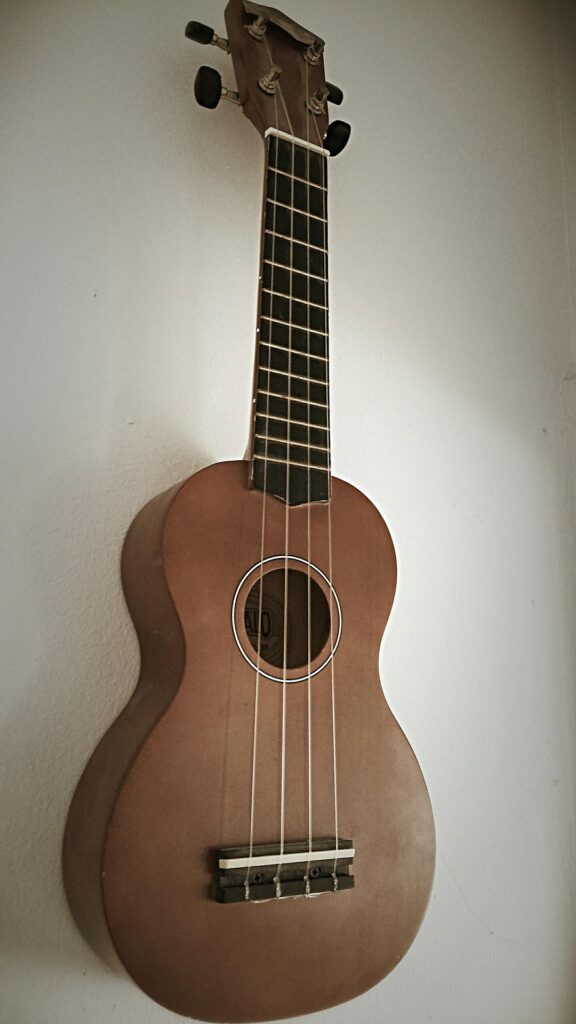
The course is for players at an intermediate level. Enrolees must bring their own ukulele.
- Fingerpicking, ¾ timing, 4/4 timing, tremolo
- Quick change songs, fast chord change pieces
- Romantic vibes, review of tablature
- Compose a short piece of music using given chord progression
- Musical piece played in parts
- An easy arrangement of a piece of music played in 3 parts
- Movable chord shapes
Read the booking instructions and download the application form.
Do you need additional information or guidance?
Then contact either Alan Hough or Neill Stewart